top of page

Rachel West
3D Artist and Game Developer


Sharktographer
Dive into the deep blue with a periscope and your trusty pedagogical assistant, A.M.E.G.A.! In this educational experience, your task is to snap pictures of underwater wildlife and collect info. Can you find all 8 before you reach the end of the valley?
This project spawned in collaboration with the Florida Museum of Natural History. Utilizing high-quality CT scans of fish, we created a short VR educational experience fit for an temporary exhibit installation. We had the pleasure of demoing the final application to the public on December 8, 2023.
Personal Responsibilities
Team
Ideation
3D Asset Creation
Texturing
Animation
Visual Effects
Debugging
Johnny Delgado - Project Manager, Programmer
J.J. Marin - Lead Programmer
Kevin Long - Tools Programmer
Rachel West - Lead Artist
Diana DaSilva - Artist, Logo Design
Timeline
September - December 2023
Software
Blender, Maya, Unity 3D, Substance Painter
Check out this project's itch.io page!
Contributions
A.M.E.G.A.
A.M.E.G.A. stands for Automated Machine to Gather Assets, and serves as the player's pedagogical assistant for ocean travel. Upon snapping a picture of a new creature, A.M.E.G.A will provide both verbal and written information about the creature.
A.M.E.G.A was built to be simple yet endearing. I modeled, rigged, and animated her in Maya, then completed texturing in Substance Painter.
Buggy and Periscope
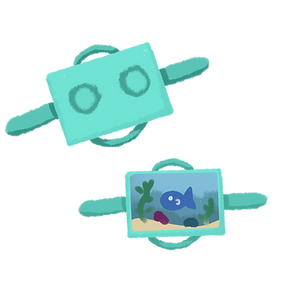
Both the submarine buggy and periscope were vital assets, given they are the closest objects to the player. The more difficult item to design was the periscope, as we wanted the handles to match up with the controller's shape. In addition, we played with screen size, and determined a small but wide screen minimized possible motion sickness related to having a second camera.
I created both models in Maya and textured them in Substance Painter, with buggy animations added in Maya.


Environment
The goal for environment creation was to create something modular and low-poly for the sake of performance optimization. For the ease of experience, players are on a fixed path, so I designed the environment to have multiple interesting angles and contain possible hiding spots for fish. The final model was built from scratch using extruded planes, and the textures were externally sourced.
In addition, I created a set of modular low-poly plants to decorate the surroundings. Modeling and animation was done in Maya, and the textures hand-painted in Substance Painter.
Fish Animations
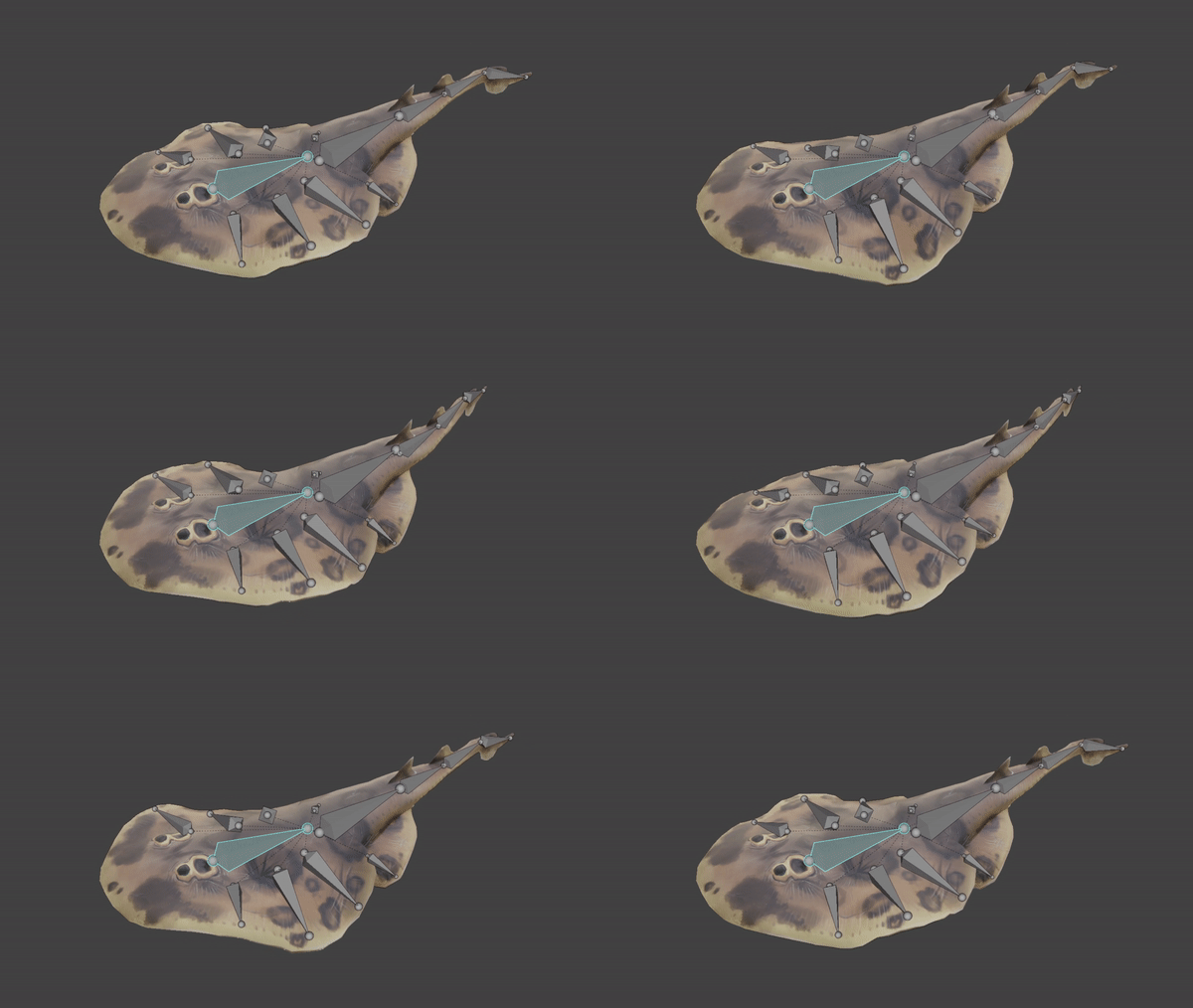
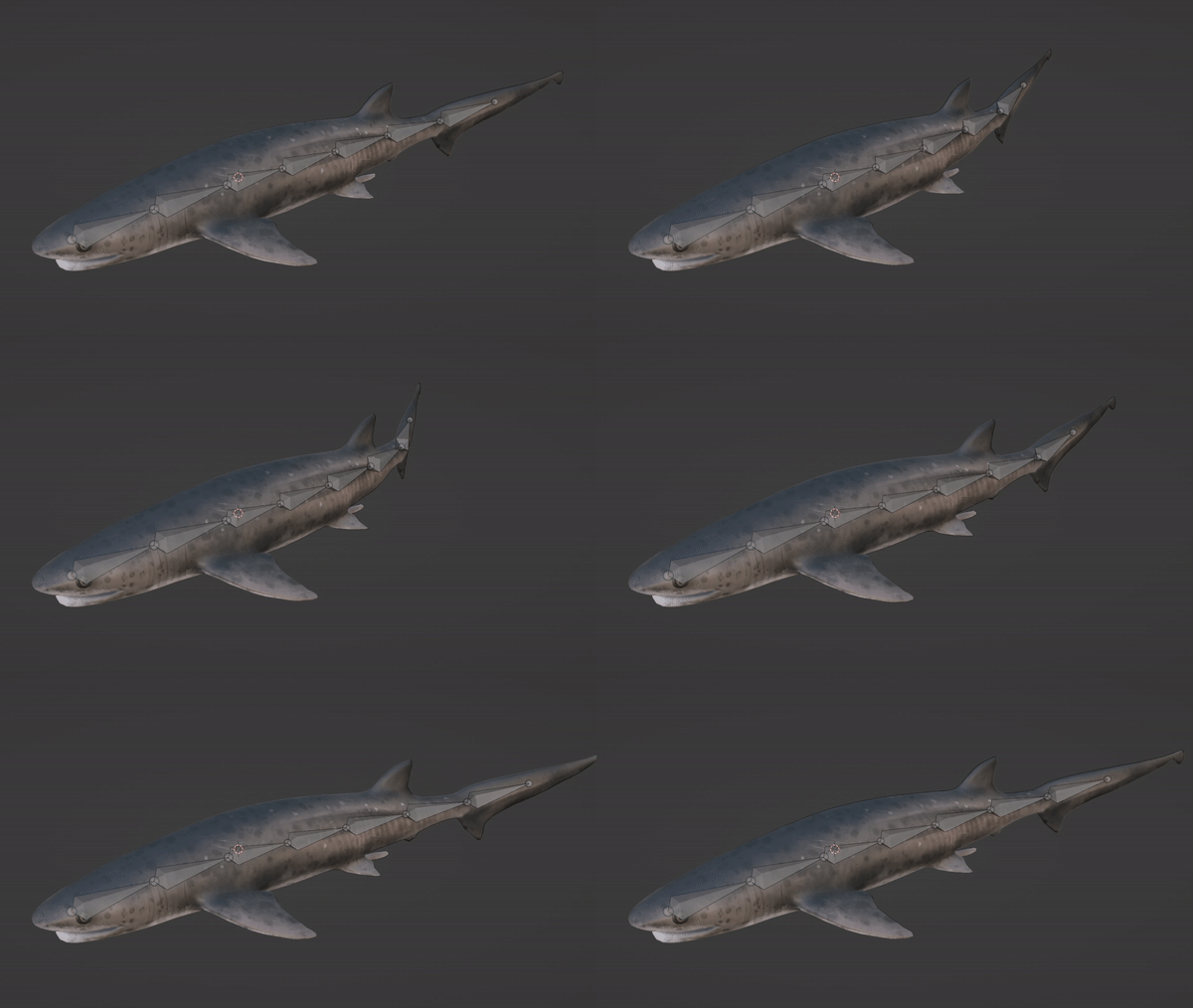
Being an educational experience, we wanted to make sure the creatures we were depicting were as true to life as possible while maintaining aesthetic rigor. We were thankfully given base models of all of the fish, however most of them had extremely dense topology and were not suited for a game environment. Diana and I tag-teamed the retopology all the models, and Diana hand-painted all the fish textures in Substance Painter. I then rigged and animated all the models in Blender before importing into the game environment.


Interaction Design
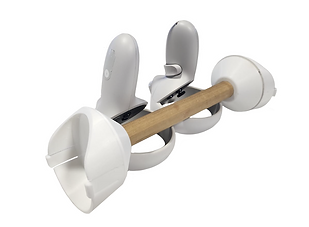
One challenge was configuring the controller design to pair with the periscope we envisioned. We found when held a certain way, the Quest 2 Controller buttons felt similar to a camera. To bind the two controllers, we 3D printed controller mounts, created a pole connecter to glue on these mounts, then wedged a 3/4" wooden pole to hold it all together.
Once we matched the in-game periscope to the physical controls, we found the peripheral to feel quite natural. However, if we were to re-design it, we would consider adding a constraint so that the player would not have to raise their arms constantly.
Personal Concept Art


Trailer Video
Project Wireframe

bottom of page